
 By
- System
- Multi-tenant legal-tech SaaS platform
On this page
The problem
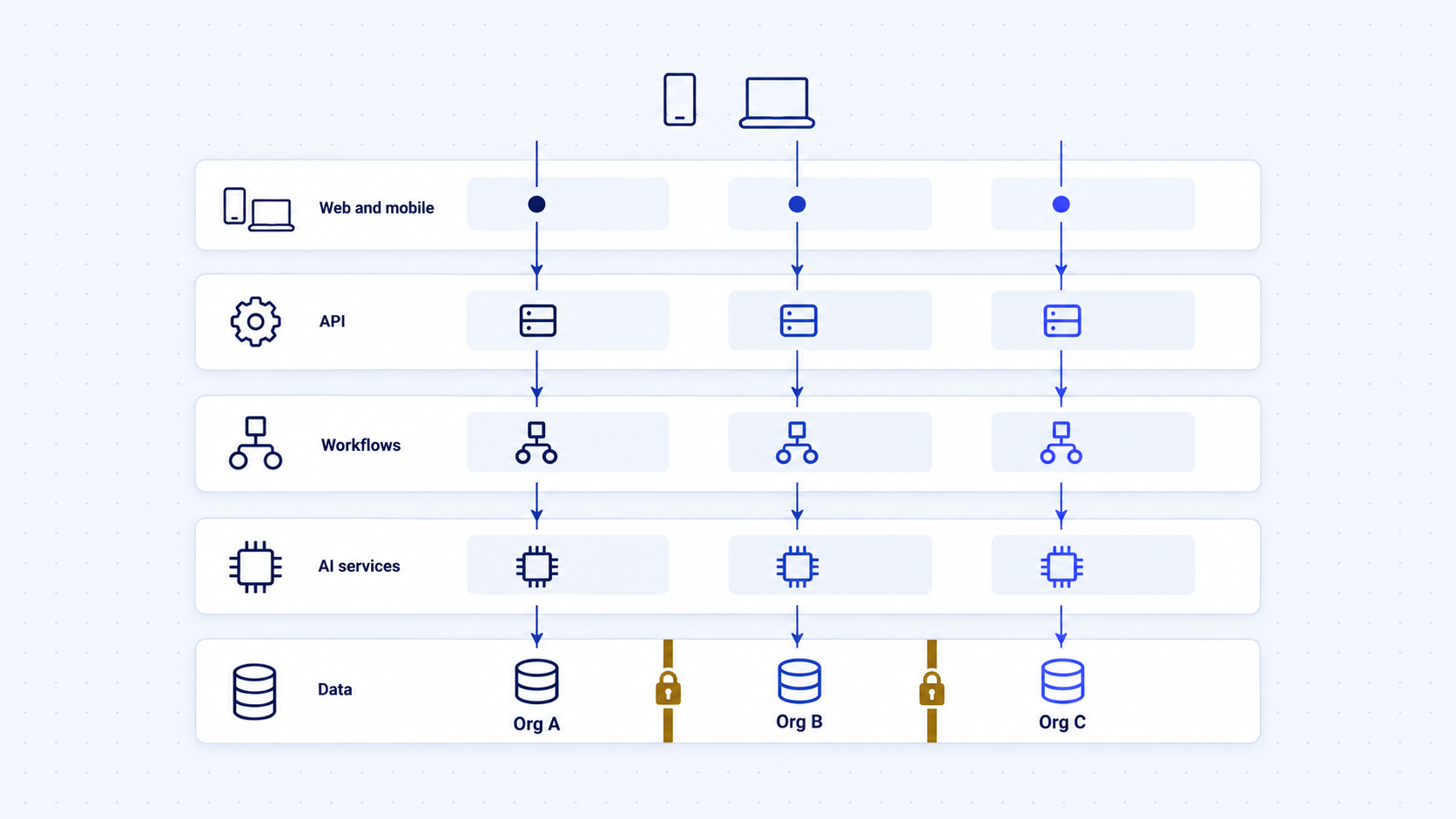
This system experience involved a legal-tech product serving different organizations and user roles. The architecture had to carry tenant context, permissions, workflow state, and operational visibility across the complete application stack. A multi-organization legal product must isolate data and workflows while supporting different roles, AI-enabled capabilities, integrations, and dependable cloud operation.
- Different organizations require isolated data and configurable workflows.
- Attorneys, staff, administrators, and clients need different permissions.
- AI features must operate within tenant and user boundaries.
- The product needs reliable web, mobile, backend, and cloud foundations.
- Integrations and background jobs must be observable and recoverable.
Who controls what
- Step 1
Server-side tenant validation and role-based permissions.
- Step 2
Encryption support and secure document access.
- Step 3
Audit events and operational logging.
- Step 4
Environment separation and secrets management.
How it is built
Multi-tenant legal-tech SaaS platform, shown as 6 ordered layers: Web and mobile interfaces, Application and API layer, Workflow and background processing, AI services, Tenant-aware data layer, Storage and external integrations.
Tenant boundary
Web and mobile interfaces
thenApplication and API layer
thenWorkflow and background processing
thenAI services
thenTenant-aware data layer
thenStorage and external integrations
What the team sees
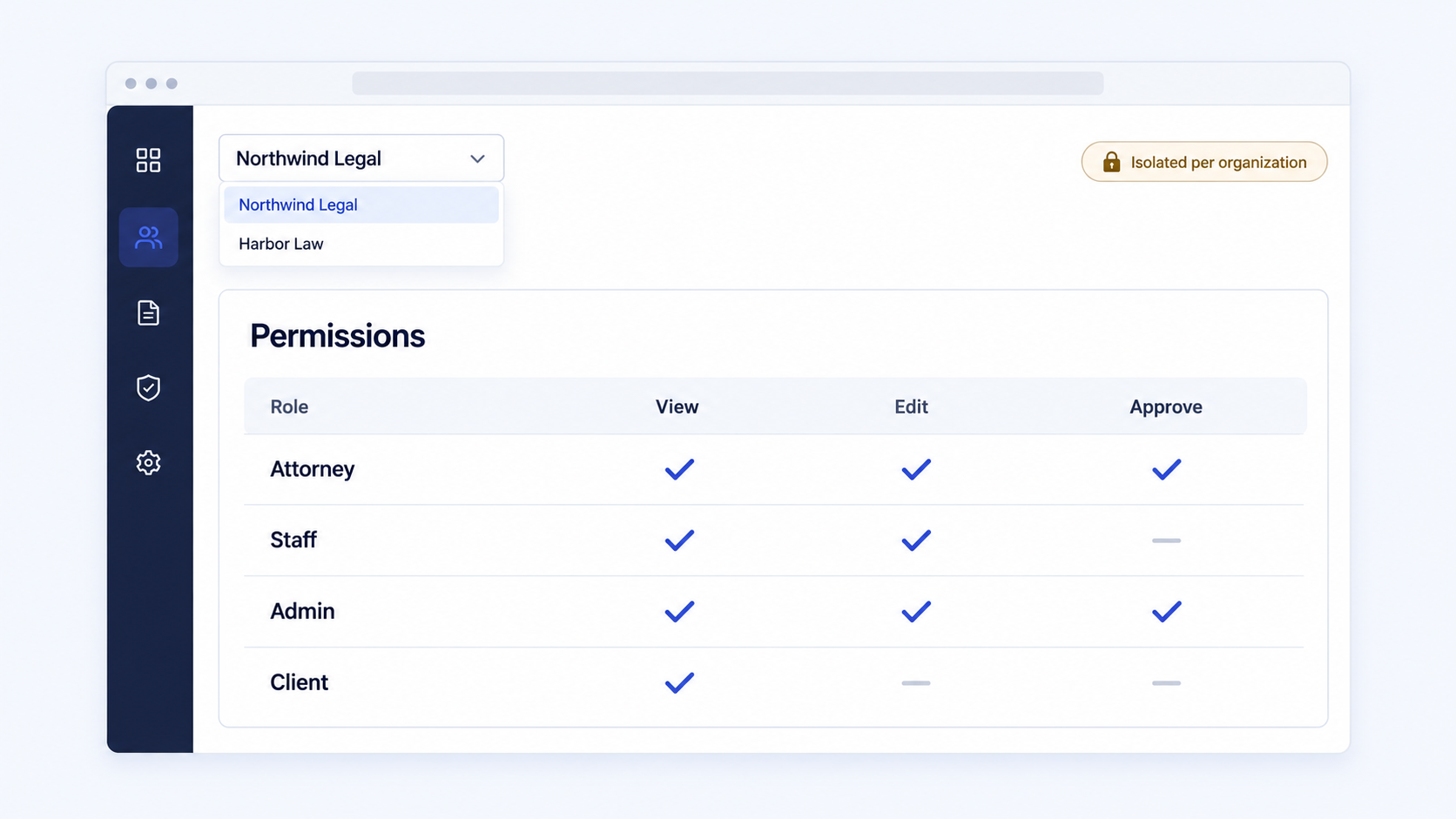
Illustration, fictional data
Reconstructed interface with fictional data. It illustrates the delivered workflow; it is not a client screenshot.My role and scope
What I owned
- Full-stack product architecture
- Web and mobile application design
- Tenant and permission modeling
- API and background-workflow engineering
- AI product integration
- Third-party integration design
- Cloud deployment
- Monitoring and operational workflows
What was built
- Multi-tenant application architecture
- Authentication and role-based authorization
- Organization-level isolation
- Administrative dashboards and attorney workspaces
- Client-facing experiences
- Document handling and notifications
- Background workflows
- Third-party integrations
- AI-enabled functionality
- Deployment and monitoring
- Full-stack product ownership
- SaaS architecture
- Tenant isolation
- Web and mobile engineering
- Cloud deployment and operational workflows
Outcome
The platform architecture was designed to support multiple organizations, complex roles, and AI-enabled workflows without treating security or operational reliability as an afterthought.