
 By
- System
- Connected workflow and case-operations system
On this page
The problem
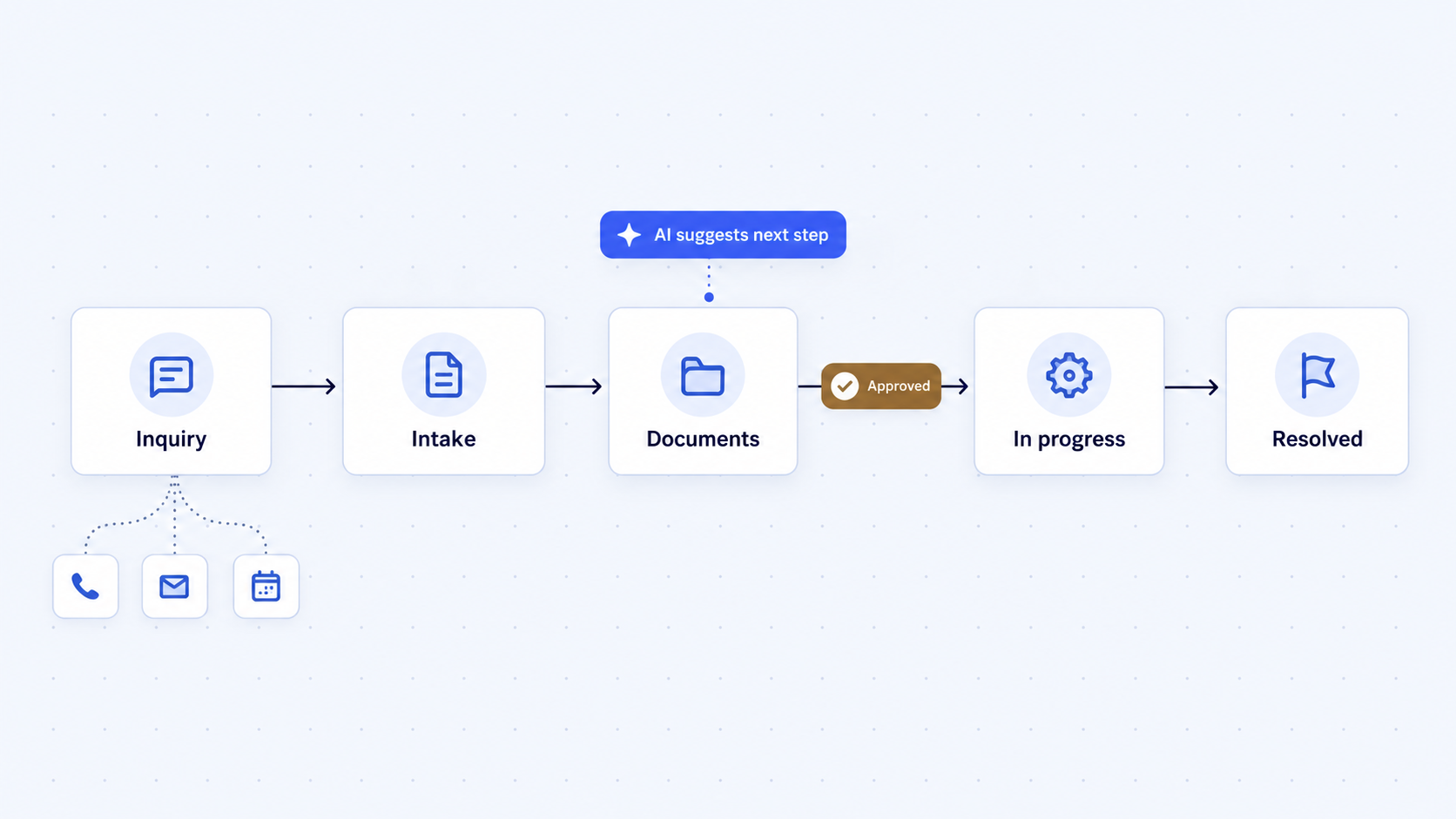
This system experience focused on the operational journey from a new inquiry through intake, matter progression, and resolution. The work treated the matter as a connected lifecycle rather than a collection of isolated AI features. Legal operations can lose continuity when information, documents, tasks, and communications move through disconnected systems and individual memory.
- Information moves through disconnected tools.
- Staff manually coordinate documents, tasks, and communication.
- Case progression can depend on individual memory.
- AI recommendations need appropriate human authority.
- Every important action needs traceability.
Who controls what
- Step 1
Access
retrieve matter information permitted for the user and workflow.
- Step 2
Recommend
prepare summaries, next actions, or drafts for review.
- Step 3
Execute
perform an explicitly approved action within defined limits.
- Step 4
Authority varies by role, workflow stage, action type, and risk.
How it is built
Connected workflow and case-operations system, shown as 5 ordered layers: Client and staff interfaces, Workflow orchestration, Specialized AI agents, Matter and document data, External integrations.
Client and staff interfaces
thenWorkflow orchestration
thenSpecialized AI agents
thenMatter and document data
thenExternal integrations
What the team sees
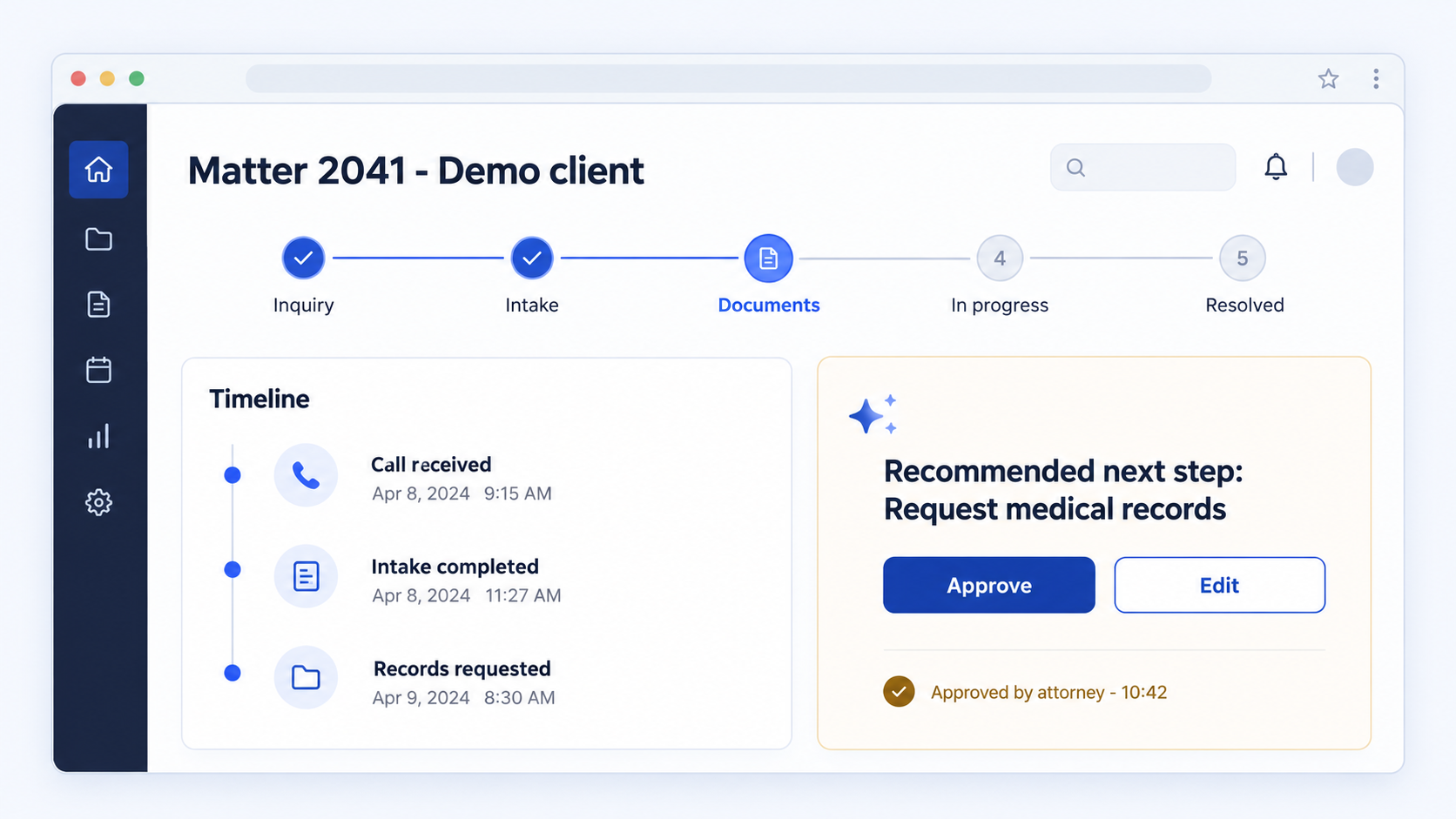
Illustration, fictional data
Reconstructed interface with fictional data. It illustrates the delivered workflow; it is not a client screenshot.My role and scope
What I owned
- Full-stack architecture
- Workflow design
- AI-agent integration
- Document processing
- Permissions
- Auditability
- Integration design
- Deployment and operational support
What was built
- New-caller and intake workflows
- Intake verification and matter creation
- Document collection and analysis
- Case-stage tracking
- Task and calendar coordination
- Communication workflows
- Recommended next actions
- Human approvals
- Settlement or resolution workflows
- Mobile or client-facing access where appropriate
- End-to-end legal workflow understanding
- Agent orchestration
- Human-in-the-loop design
- Production application engineering
- Integration of AI into operational software
Outcome
The result was a unified system architecture designed to coordinate legal operations while keeping consequential decisions and actions under explicit human control.