
 By
- System
- Document intelligence and legal knowledge system
On this page
The problem
This system experience centered on transforming approved legal documents and structured information into a reusable knowledge layer while preserving the distinction between source material and generated output. Important legal knowledge is often distributed across documents and systems, while generic search and chat experiences can miss context, permissions, and source evidence.
- Important knowledge is spread across documents and systems.
- Traditional keyword search can miss relationships and context.
- Generic chat interfaces may answer without sufficient grounding.
- Permissions must apply during retrieval.
- Attorneys need visible sources, not unsupported output.
Who controls what
- Step 1
Authorization applied before and during retrieval.
- Step 2
Document identity and citations preserved through the response path.
- Step 3
Human review retained before consequential use.
- Step 4
Retrieval and response quality evaluated separately.
How it is built
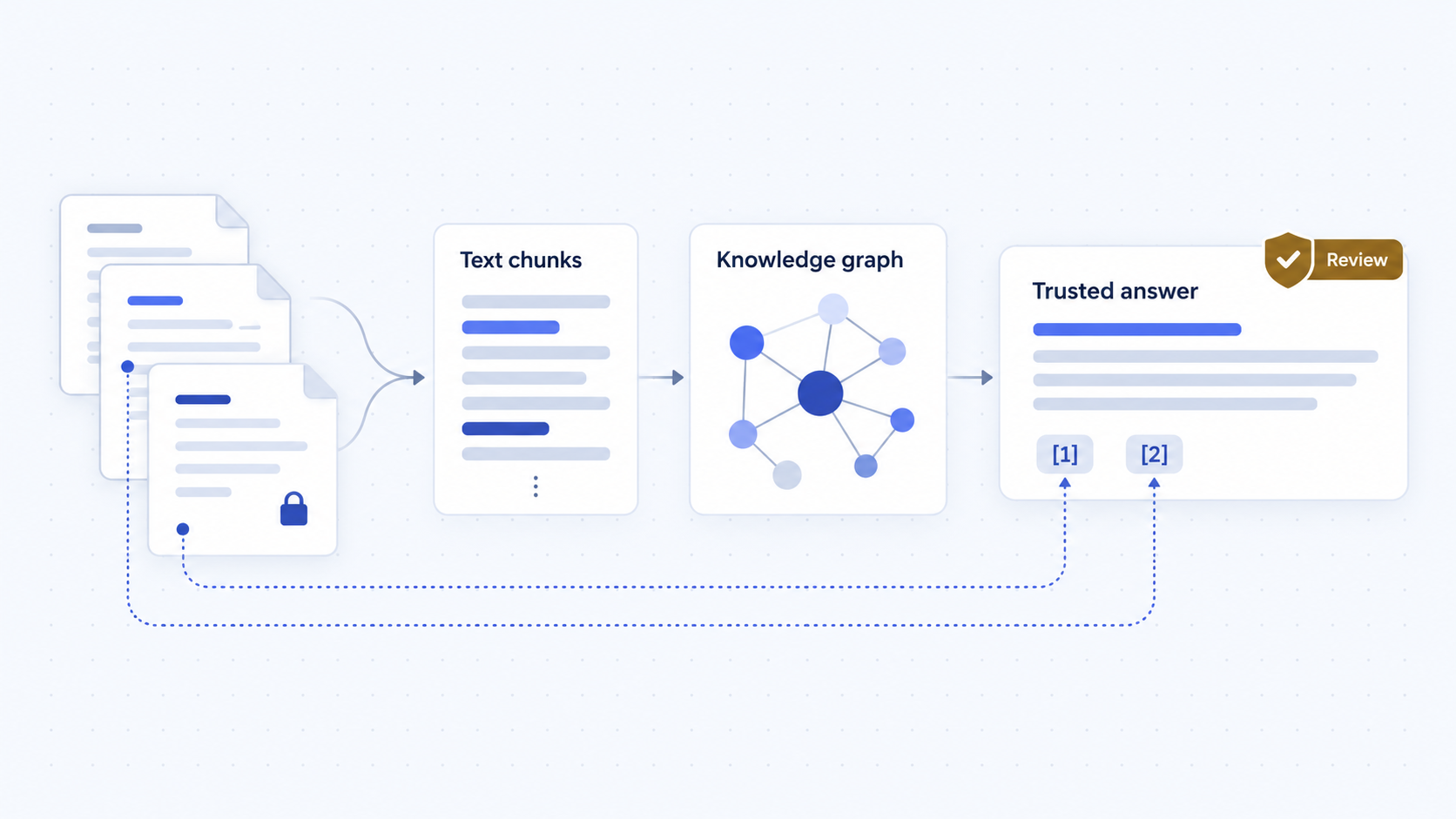
Document intelligence and legal knowledge system, shown as 7 ordered layers: Approved sources, Ingestion, Processing, Knowledge layer, Retrieval, AI response, Human review.
Approved sources
thenIngestion
thenProcessing
thenKnowledge layer
thenRetrieval
thenAI response
thenHuman review
Engineering decisions
- Separate source from generation: Store and present approved source documents independently from model-generated summaries or answers.
- Preserve citation identity: Carry document, section, and retrieval context through the response so reviewers can return to the source.
- Authorize retrieval: Apply user and matter permissions when selecting candidate information, not only after output is generated.
- Combine retrieval signals: Use semantic retrieval with structured metadata when either method alone loses necessary context.
- Model relationships explicitly: Use graphs or ontologies where entities and relationships are central to the legal question.
- Evaluate the stages separately: Measure retrieval relevance independently from response grounding and usefulness.
What the team sees
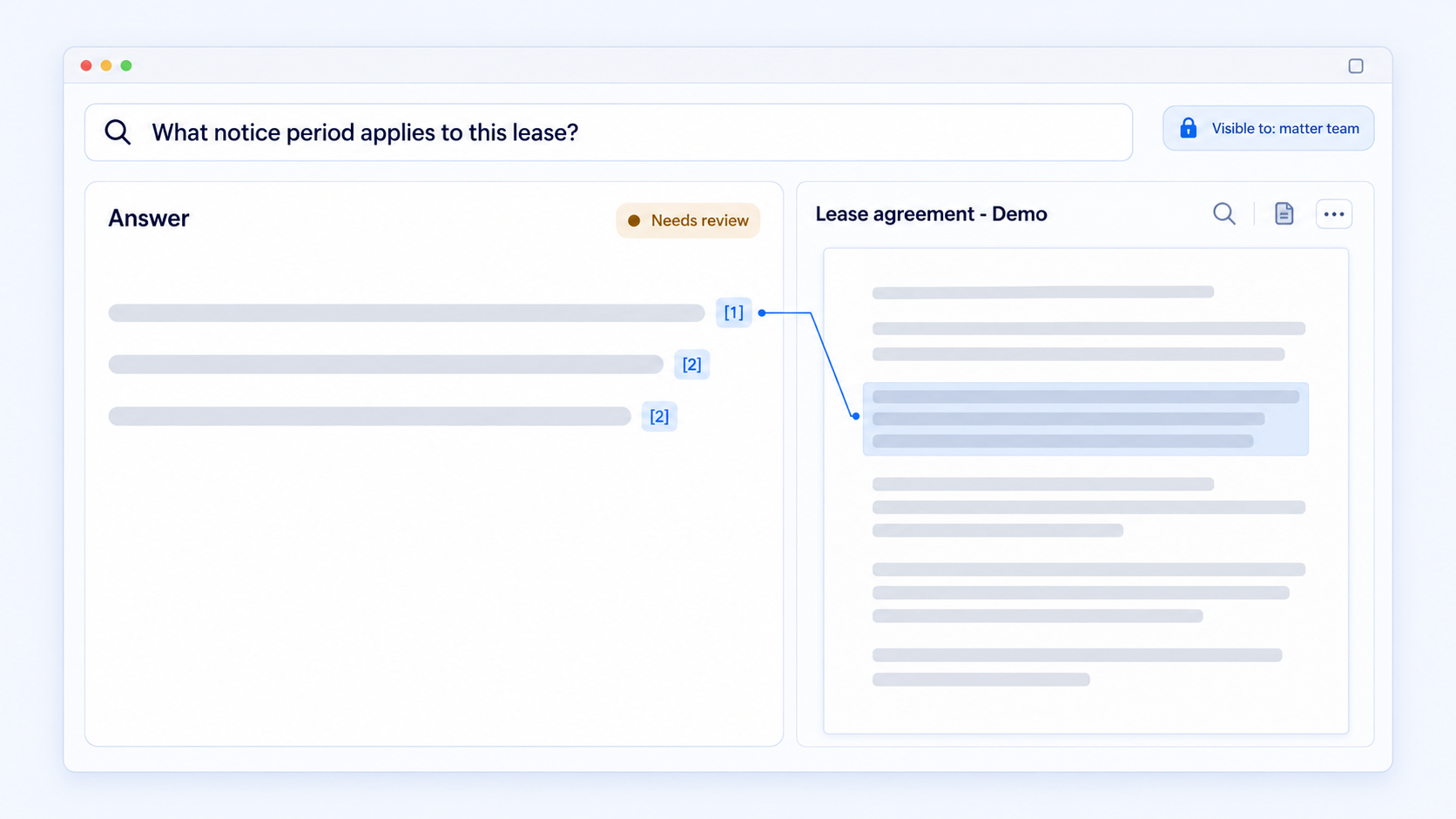
Illustration, fictional data
Reconstructed interface with fictional data. It illustrates the delivered workflow; it is not a client screenshot.My role and scope
What I owned
- Document-processing architecture
- RAG and retrieval design
- Knowledge modeling
- Permissions-aware access
- Citation traceability
- Evaluation design
- Application integration
- Operational monitoring
What was built
- Document ingestion
- Text extraction and normalization
- Classification and structured metadata
- Chunking and indexing
- RAG retrieval and source citations
- Knowledge relationships and ontology support
- Permissions-aware search
- Human review
- Feedback and evaluation
- Legal document processing
- RAG architecture
- Knowledge graphs and ontologies
- Permissions-aware retrieval
- Evaluation and traceability
Outcome
The system was designed to transform approved legal information into a searchable and reusable knowledge layer while maintaining source visibility and access boundaries.